Can I swim with a finger prosthesis?

Getting a silicone finger prosthesis wet is not a problem — washing your hands or showering is fine. But long periods of swimming can weaken the suction that holds it on, so it may slip off. For pools and the sea, many people take it off for a while or wrap it with waterproof tape. Prostheses with electronic parts should be kept out of water.
The material copes with water — swimming is a different matter
Silobionic finger prostheses are made from medical-grade silicone, so water does not damage them. Washing up, washing your hands or walking in the rain are nothing to worry about.
What needs care is not the material but the way the prosthesis stays on. A finger prosthesis is held in place by close suction against your affected area. Staying in water for a long time, or moving your hand constantly through it, can weaken that hold. Being water-resistant and being suited to swimming are not the same thing.
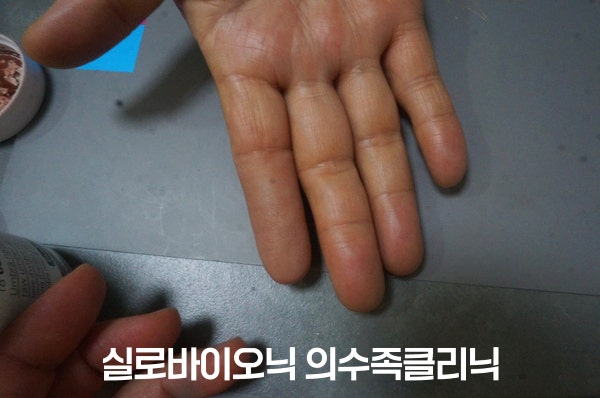
How each type compares
| Type | Getting wet | Swimming |
|---|---|---|
| Cosmetic silicone finger | The material is fine | May slip off after a long time in water |
| Silicone work finger | Copes well | Suction may weaken over long periods |
| Functional prosthesis with electronics | Risk of damage | Take it off before swimming |
Water resistance varies between makers and models of powered prostheses, so check the manufacturer’s instructions for yours.
What about saunas and hot baths?
Silicone copes well with water and heat, so the material itself is unlikely to be harmed, and a well-fitted prosthesis does not come off easily. Two things to keep in mind:
- Sweat — sweating can loosen the fit, so check from time to time that the prosthesis is still secure.
- Colour — heat makes your skin flush, so the difference in colour between your skin and the prosthesis may be more noticeable than usual.
What if I swim often?
Leg prostheses have waterproof covers for use in water, but there is no swimming-specific version of a finger prosthesis. That is why many of our customers simply take theirs off before getting in.
If you would rather keep it on, one method we have tried ourselves is wrapping waterproof tape around the edge where the prosthesis meets your finger. We have heard from a customer who swims regularly wearing a single-segment finger prosthesis, but results depend on the shape and length of your affected area. If you plan to swim, tell us during your consultation and we will work out an approach with you.
Aftercare once it has been in water
- Rinse it gently in clean water — especially after seawater or a chlorinated pool.
- Pat it dry and let it dry fully before storing it.
- If it tears or becomes loose, contact us for after-sales support. If a repair is not possible, we will guide you through a remake.
If you swim, bathe or have your hands in water a lot, let us know before we start. Knowing your routine helps us advise on how the prosthesis is worn and cared for.
Frequently asked questions
Can I shower wearing my finger prosthesis?
Yes. Afterwards, pat it dry and let it dry fully.
Can I wear it in the sea?
You can, but we do not recommend wearing it for long. Salt water and constant movement can weaken the fit.
How can I stop it slipping off when I swim?
Wrapping waterproof tape around the edge of the prosthesis can help. Results vary with the shape and length of your affected area, so we check this with you in person.
Can a powered (electronic) prosthesis get wet?
Prostheses with electronic parts can be damaged by water, so take them off before swimming. Check the manufacturer’s instructions for your model.