A short fourth toe from brachydactyly: is a silicone toe prosthesis an alternative to surgery?
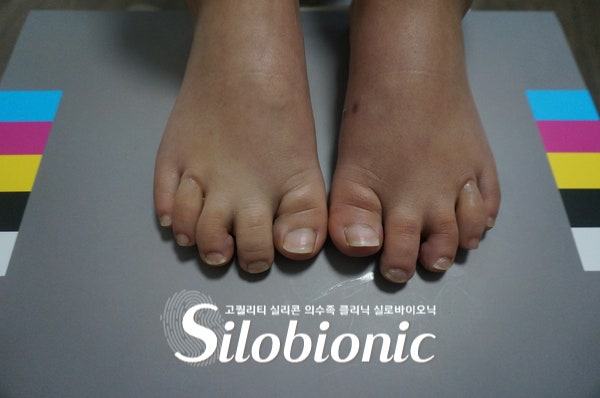
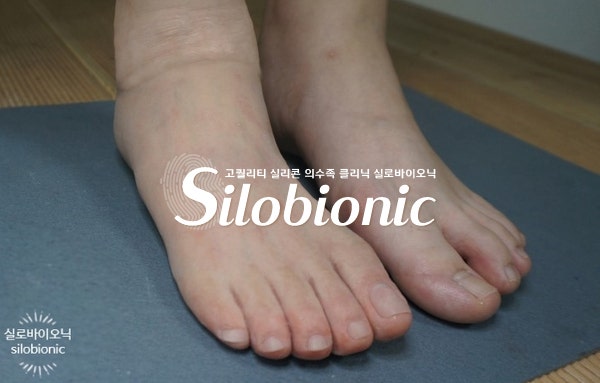
Toe brachydactyly means part of a toe bone grows short, most often leaving the fourth toe noticeably shorter than the rest. Many people live with it comfortably, and bone-lengthening surgery is a decision to make with an orthopaedic specialist. If you simply want to fill in the length and shape without surgery, a custom silicone toe prosthesis that slips over the short toe is another option.
What is toe brachydactyly?
Brachydactyly is a congenital difference in which one of the bones of a finger or toe grows short, so that digit looks shorter than the others. On the foot it most often affects the fourth toe, which is why it is sometimes simply called a short fourth toe.
Because toes spend most of the day inside socks and shoes, many people barely think about it for years. It tends to matter most in summer: our customers often tell us they find themselves hiding their feet when wearing sandals or at the pool or beach.
Does it need to be corrected?
No. If it does not get in the way of daily life, many people leave it as it is. People usually start to consider correction for one of three reasons:
- Recurring discomfort — if walking or wearing shoes is repeatedly uncomfortable, see a doctor to find out why.
- Everyday limits — when your feet make you hesitate about work or sport you would like to do.
- Appearance — when showing bare feet feels difficult enough that you avoid summer shoes or swimming.
Surgery or a silicone toe prosthesis: how do they differ?
| Surgery | Silicone toe prosthesis | |
|---|---|---|
| What it does | Changes the length of the bone itself | Slips over the short toe to fill in its visible length and shape |
| Examples | Bone lengthening, bone grafting (decided by your doctor) | Custom-made from moulds of your other foot and neighbouring toes |
| Commitment | An operation and a recovery period | No operation; worn and removed as you wish |
| Who to consult | An orthopaedic specialist | A prosthetics clinic |
Surgery works on the bone, so whether it suits you and how recovery will go are questions for your medical team. If both feet are affected, or the person is still growing, there may be more to weigh up. A silicone toe prosthesis leaves the bone untouched and restores appearance, so it is worth looking at before deciding on surgery, or if surgery is not something you want.
How is a silicone toe prosthesis made?
- Casting — we take moulds of the short toe, your other foot and the neighbouring toes to set the length, thickness and toenail shape.
- Skin-tone measurement — an E-SKIN scanner (SPECTROMATCH, UK) measures your skin tone digitally, and we mix pigments to match.
- Check socket — a temporary trial version lets us confirm the length and how snugly it fits, and adjust before the final piece.
- Delivery — we finish details such as the toenail, creases and veins, then show you how to put it on and care for it.
The standard process is three visits and takes about 4–6 weeks from consultation to delivery (1–2 weeks with express production). Timelines depend on your foot, so we confirm yours during the consultation. If you are travelling from abroad, send us photos in advance and we will plan the visits with you.
What difference does it make?
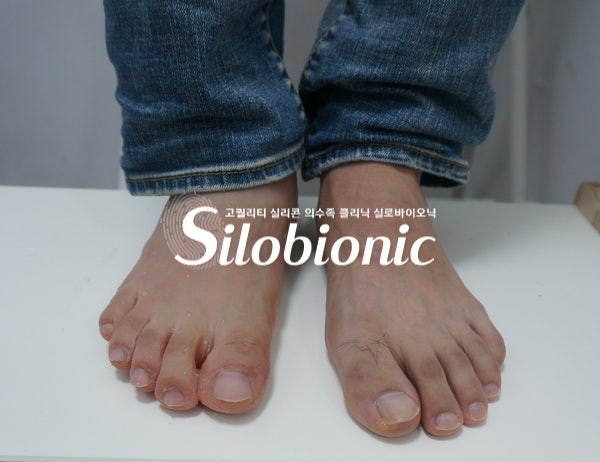
The change our customers mention most is summer footwear. People who used to avoid sandals and slippers tell us that showing their bare feet became much easier. We aim for a toe that is difficult to tell apart from a real one, but results vary with the shape and length of your toe.
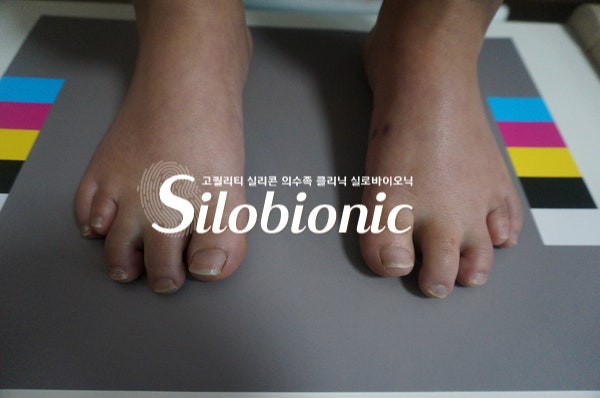
We photograph every before-and-after under the same conditions, with a standard colour chart and no retouching, so during a consultation you can judge from real examples similar to your own.
Care and after-sales support
Medical-grade silicone is not damaged by water. After a day’s wear, wash it, dry it thoroughly and store it. If it tears or loosens, we provide after-sales support, and if a repair is not possible we will guide you through a remake. Because we keep your production records, a remake does not start from scratch.
Frequently asked questions
What causes toe brachydactyly?
It is a congenital difference in which part of a toe bone grows short. Please ask a doctor about the cause and diagnosis in your case.
Can I get a toe prosthesis after surgery?
Yes. If you are still unhappy with the length or shape after surgery, we can assess your foot in person and explain what is possible.
Will people notice it when I wear sandals?
We match the skin tone and toenail and aim for a toe that is difficult to tell apart from a real one. Results vary, so we recommend looking at similar cases with us during your consultation.
How long does it take?
The standard process is three visits and about 4–6 weeks from consultation to delivery. Express production takes 1–2 weeks.
Can a short finger be treated the same way?
Yes. A silicone finger prosthesis for a short finger is made on the same principle, shaped from your other hand.