Lost the front of your foot? How a silicone foot prosthesis supports balance

When the front of the foot has been lost and only part of the heel remains, a custom silicone foot prosthesis can restore its appearance by copying the other foot, while filling the inside to match the affected area and support balance when standing and walking. In this case we made the silicone firm underfoot and soft where it touches the affected area, and checked walking and comfort with a check socket before the final piece. Comfort and changes in walking vary from person to person.
What was our customer's situation?
Many years ago, an accident took the front of one of our customer's feet, leaving only part of the heel. Losing both appearance and mobility at such an active time of life was hard, for our customer and for the whole family.
Over the years our customer had tried prostheses from several places, but had never found one that was pain-free, comfortable and pleasing to look at.
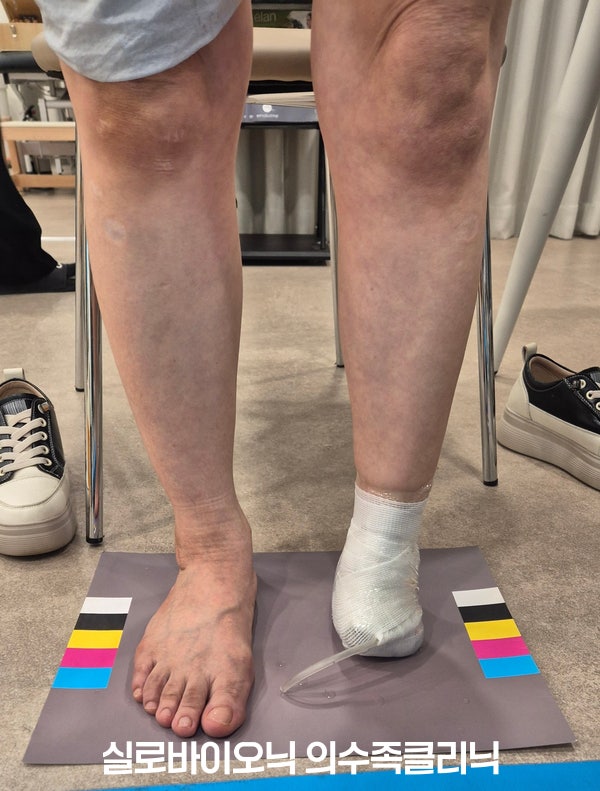
Why does the inside of a foot prosthesis matter so much?
Without the front of the foot, body weight shifts onto the remaining heel, and if the affected area moves inside the prosthesis, walking quickly becomes uncomfortable. So rather than just imitating the outside, we fill the inside of the prosthesis to match the affected area and make each part a different firmness.
| Area | Design | Why |
|---|---|---|
| Sole | Firm | Carries body weight and meets the ground |
| Surface touching the affected area | Soft | Reduces pressure on the skin |
| Inner space | Filled to the shape of the affected area | Keeps the foot from moving inside |
| Outside | Moulded from the other foot | Both feet match, down to the toes and nails |
Nothing is chosen from standard sizes: each prosthesis is made for one person, to fit the affected area and the way they walk.
How was it made?
- Casting — we moulded the whole of the other foot, then moulded the toes a second time so the nails could be reproduced. The affected area was also moulded to shape the inside.
- Skin-tone measurement — an E-SKIN scanner (SPECTROMATCH, UK) measured the skin tone digitally.
- Explaining the plan — we first explained how the shape of the affected area would guide the design.
- Check socket — our customer wore a clear trial prosthesis and walked in it, checking how it felt, foot length and balance, and anything uncomfortable when walking, then agreed the changes with our team.
- Finishing — every change was built into the final prosthesis.

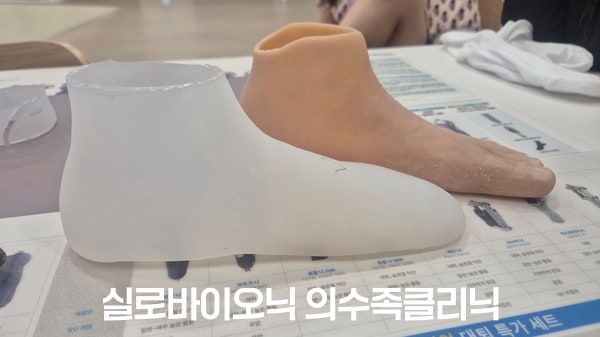
How did our customer feel about the result?
Trying on the finished prosthesis, our customer said each request had been reflected, and that for the first time a prosthesis felt like "my own foot". Our customer also said it brought back many thoughts of their mother, who had stood by them through the hard years.
We aim for a foot that is difficult to tell apart from a real one and for more comfortable walking, but results vary from person to person. If anything becomes uncomfortable with use, we adjust it through after-sales support, and if a repair is not possible we will guide you through a remake.
Why do "silicone prostheses" differ so much?
The name may be the same, but how a prosthesis feels depends on which silicone is used and how it is designed area by area. Silobionic uses medical-grade silicone from Technovent (UK), for whom we are the exclusive partner in Korea, and sets the firmness of each area to fit the affected area and walking pattern. The standard process is three visits; from consultation to delivery takes about 4–6 weeks, or 1–2 weeks with express production.
Frequently asked questions
Can I wear a silicone prosthesis if I have lost the front of my foot?
Yes. Even when only part of the heel remains, we can make a silicone foot prosthesis that fills the inside to match the affected area and copies your other foot on the outside.
Does a silicone foot prosthesis help with walking?
With a firm sole and a soft inner surface, the aim is to support balance when standing and walking. The effect varies from person to person, and we test walking at the check-socket stage first.
What is checked at the check-socket stage?
You wear a clear trial prosthesis and we check how it feels, foot length and balance, and anything uncomfortable when walking. Your feedback is built into the final prosthesis.
My previous prosthesis was uncomfortable. Is it worth trying again?
Our customer in this story had also tried several prostheses before coming to us. Tell us what bothered you about your previous one, and we will take it into account in the design.