What is a forearm (transradial) amputation, and which prosthesis can I choose?
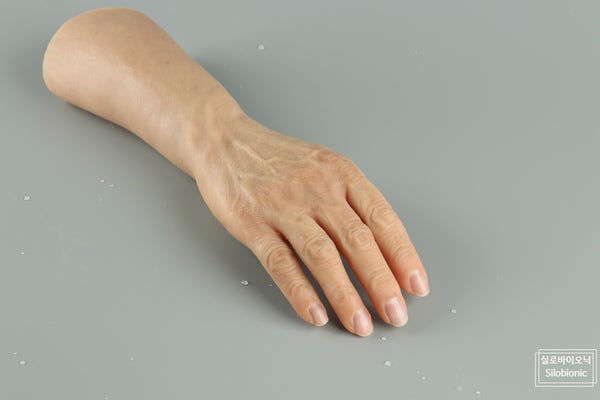
A forearm (transradial) amputation is one between the wrist and the elbow. Most people keep full elbow movement, so a forearm prosthesis must fit the residual limb securely without restricting the elbow. You can choose between a custom silicone forearm prosthesis, which restores appearance, and a functional prosthesis (hook, semi-automatic or myoelectric), which helps with grip — depending on what you need.
How are upper-limb amputations classified?
Upper-limb amputation covers any loss of part of the arm, from a finger to the shoulder — whether through an accident or illness, or because it did not form before birth (congenital limb difference). The level of amputation shapes which prostheses are possible and how they are made, so knowing the name of yours makes a consultation much easier.
| Level | Where |
|---|---|
| Partial hand | Within the hand, including finger amputations |
| Wrist disarticulation | Through the wrist joint |
| Transradial (forearm) | Between the wrist and the elbow |
| Elbow disarticulation | Through the elbow joint |
| Transhumeral | Above the elbow, below the shoulder |
| Shoulder disarticulation | Through the shoulder joint |
| Forequarter | Including the collarbone and shoulder blade |
As a rule, the closer the amputation is to the fingertips, the more remaining joints you can use; the closer it is to the body, the more a prosthesis depends on secure suspension and good weight distribution.
How does losing a hand or arm affect daily life?
Losing an arm rarely affects walking directly, but the hand is the part of the body we use most. It touches everything from lifting and holding, eating, washing and dressing, to writing, typing and the moments when your hands are on show in front of other people. That is why we start by listening to how you live and what you want the prosthesis for, rather than simply filling a gap.
What matters most in a forearm prosthesis?
The forearm has two bones, the radius and the ulna, and an amputation through this section is called transradial. Hand function is lost, but the elbow usually still moves normally, so a forearm prosthesis has to meet two conditions at once:
- A secure fit — it holds the residual limb (the end of the arm after amputation) firmly, so it does not shift when you move.
- An unrestricted elbow — it does not get in the way of bending and straightening your arm.
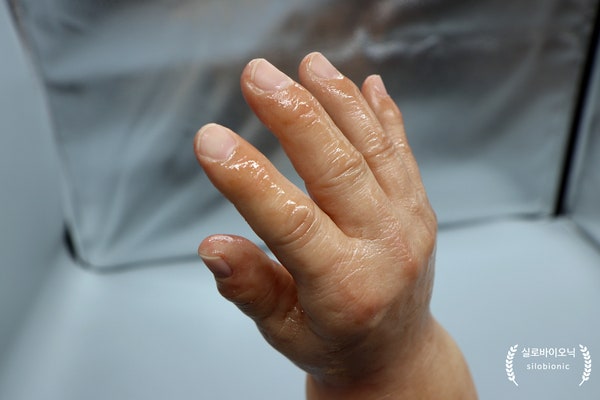
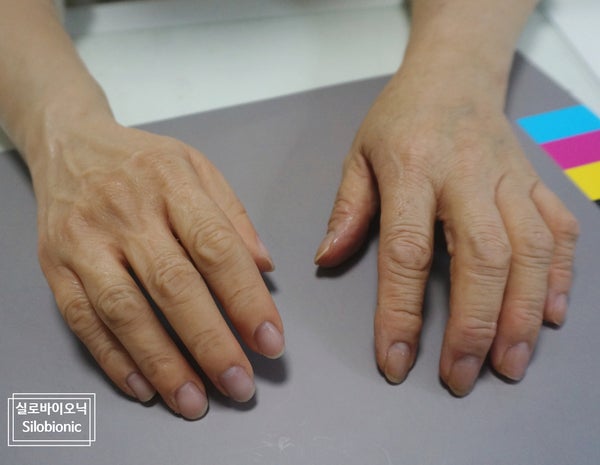
On top of that, it needs to match the shape of your other hand and arm, your skin tone, nails and skin texture, so that both arms look natural together.
Silicone or functional: what is the difference?
| Custom silicone forearm prosthesis | Functional prosthesis (hook, semi-automatic, myoelectric) | |
|---|---|---|
| Purpose | Restoring appearance | Helping with tasks such as gripping and lifting |
| Features | Shaped from your other hand, digitally matched skin tone, nails and creases | Opens and closes by body movement or by muscle signals, depending on the type |
| Limits | Cannot grip on its own or perform fine movements; offers light support in daily life | Appearance, weight and care vary from product to product |
| Suits you if | You want your hand and arm to look natural, or feel less exposed when meeting people | You need a working grip, for example at work |
Functional prostheses are made by a range of manufacturers and work in different ways. Which direction suits you depends on the length of your residual limb and how you live, and we decide it with you during the consultation.
How is a silicone forearm prosthesis made?
- Casting and skin-tone measurement — we take moulds of your residual limb and your other arm, and measure your skin tone digitally with E-SKIN (SPECTROMATCH, UK) to mix custom pigments.
- Check socket — before the final prosthesis, a temporary trial socket lets us confirm and adjust the fit and comfort.
- Delivery — the prosthesis is coloured to reflect the features of your own skin, and the nails are made with our patented nail-making method.
Silobionic also holds a patent for its forearm-prosthesis manufacturing method. The standard process is three visits, taking about 4–6 weeks from consultation to delivery (1–2 weeks with express production). Silicone copes well with water and heat, so it suits everyday use. Results and timelines depend on the condition of your residual limb.
Frequently asked questions
Can you make a silicone prosthesis for a forearm amputation?
Yes. After checking the length and shape of your residual limb, we make a custom silicone forearm prosthesis.
Can I hold things with a silicone prosthesis?
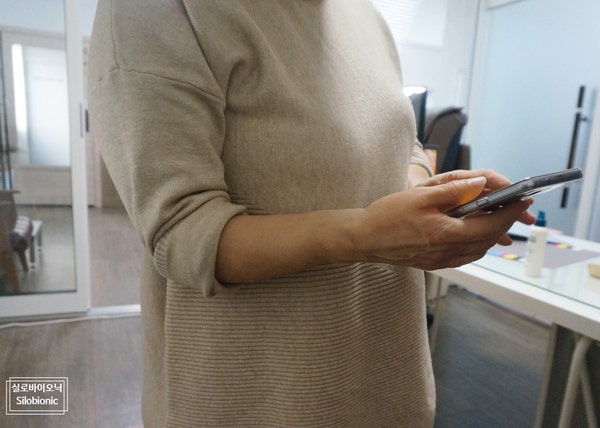
A silicone prosthesis is mainly for appearance, so its purpose differs from a functional prosthesis designed for a strong grip or fine movements. Depending on your situation, it can offer light support in daily life.
What matters most in a forearm prosthesis?
A structure that fits the residual limb securely without restricting the elbow. Matching the shape, skin tone and nails of your other arm is what makes it look natural.
Who is a silicone forearm prosthesis right for?
People who want their hand and arm to look natural, or who want to feel less exposed when meeting others. If you need a working grip, ask us about functional options too.