Lost your feet to diabetes: can a better-fitting prosthesis bring back long walks? A customer story
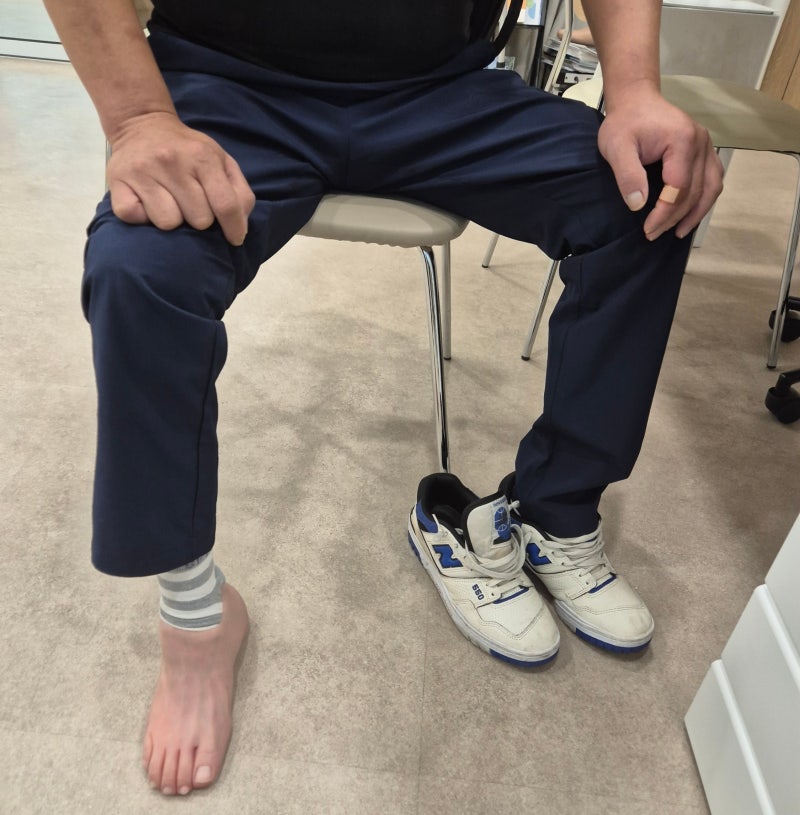
With a full-foot prosthesis, how it carries your body weight can shape how far you want to walk. Our customer, who lost both feet to complications of diabetes, had long made do with a worn prosthesis. After walking on flat floors, stairs and ramps in a new one — comfortable against the residual limb and firmer underfoot — our customer began thinking about trail walks again. Results vary from person to person.
What was our customer's situation?
A few years ago our customer lost both feet to complications of diabetes, and had relied on the same prostheses ever since. This time we began by making a new prosthesis for one foot.
What was wrong with the old prosthesis?
The previous prosthesis was made of leather. Over the years its colour had faded and it had torn in several places. When it was damaged there was nowhere to have it repaired, and walking in it never felt quite right.
Even so, replacing it was not an easy decision. It had been relatively inexpensive, which is why our customer kept using it, and choosing a new prosthesis took a good deal of thought.

How was the new prosthesis designed?
A prosthesis that replaces the whole foot has to take your full body weight with every step. So before deciding on shape, we looked at the residual limb together with our customer's daily activities. We took a cast to capture its form, then gave each area of the prosthesis its own job.

| Area | How we made it | Why |
|---|---|---|
| Inner surface against the residual limb | Comfort comes before anything else | Skin contact has to be comfortable for longer walks |
| Sole | Firmer than before | To take body weight steadily and pass force forward with each step |
| Overall | Different properties in different areas | To balance comfort and support |
Why did walking matter so much?
Our customer used to love long trail walks. With the old prosthesis, though, walking was uncomfortable, the distances kept shrinking, and in the end a short stroll near home was as far as it went. When walking becomes hard, it is not just distance that shrinks — the list of things you feel like doing can shrink too.
What changed with the new prosthesis?
The feel of the ground was the thing our customer mentioned before anything else. Compared with the old prosthesis, weight seemed to go through the foot differently, and each step felt steadier.
After several rounds of walking across flat floors, stairs and ramps in our clinic, the hesitation had gone. Our customer told us the decision had been worth it, and said that once the other foot is done, trail walking is back on the list. Comfort and results depend on the residual limb and vary from person to person.
What should you check when choosing a full-foot prosthesis?
- Does it fit the residual limb as it is now? — The limb can change over time, so the fit should be based on its current state.
- Does it support your weight steadily? — Try it on stairs and ramps as well as on flat ground.
- Have appearance and comfort both been considered? — Looking natural and staying comfortable all day both matter.
- Can it be adjusted and repaired later? — You will wear it for years, so check that aftercare continues.
If you have diabetes, take particular care of your skin and circulation. If redness or a wound appears on the residual limb, please see your doctor as well.
At Silobionic we bring 15+ years of know-how and more than 6,000 prostheses made to every consultation, looking at the residual limb and your daily life together before deciding how to make it. After delivery we provide after-sales care while you use it, and if a repair is not possible we will talk you through a remake.
Frequently asked questions
Is it fine to keep using an old, inexpensive prosthesis?
If you walk without discomfort, it may be. But if it has torn or discoloured, or you find yourself walking noticeably less, it is worth having it checked.
Does a firmer sole make the prosthesis uncomfortable?
Each area is made differently. The side against the residual limb prioritises comfort, and the sole prioritises support. How it feels varies, so we check it with you while you wear it.
If both feet need prostheses, are they made at the same time?
This customer had one foot done and then moved on to the other. The order and timing are agreed in consultation based on your residual limbs and daily life.
Can I have a foot prosthesis made if I have diabetes?
It depends on the condition of the residual limb. If you have wounds or skin problems, please speak to your doctor beforehand; we also keep an eye on your skin throughout the process.