What changes when you lose a big toe, and how can a silicone prosthesis help?
The big toe is known to help carry your weight and push off the ground as you walk, so many people feel less steady on their feet after losing it. A custom silicone big-toe prosthesis is shaped from your feet to fill the gap, and before it is finished you wear a check socket (a trial prosthesis) in daily life to confirm length and pressure. How much your walking changes varies from person to person.
What does the big toe do?
The big toe is the thickest of the toes, and it is known to help carry your weight with each step and push off the ground as your foot leaves it. That is why many people who lose a big toe feel their balance wobble when standing or walking.
The effect on walking, and on other parts of the body, differs between people, so please talk to your doctor or rehabilitation specialist about your own case. A prosthesis is one way of filling the gap along the way.
Our customer’s situation
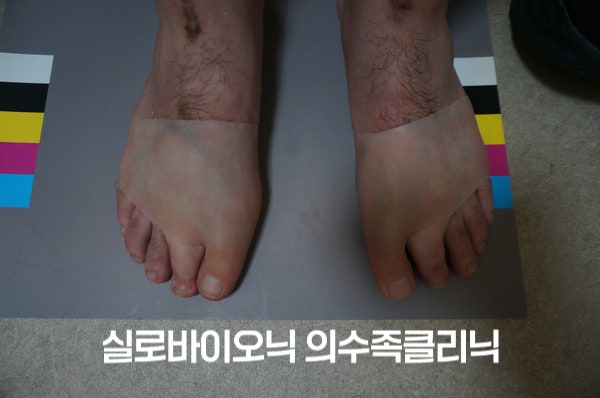
Our customer lost both big toes in an accident at work, and the skin on the top of the feet was also injured and needed long treatment. Our customer began researching prostheses while still in hospital and came to Silobionic after being discharged. The biggest concern was the feeling of losing balance when walking.
Living with a check socket before the final prosthesis
We cast both feet and measured the skin tone, then made a check socket before the final prosthesis. A check socket is a temporary prosthesis in the same shape as the finished one, worn during ordinary daily life to check:
- whether the length, thickness and proportions of the big toe suit the other toes
- whether anything presses on the top of the foot or between the toes, or feels uncomfortable when walking
After wearing the check socket for a while, our customer returned it so we could make the final prosthesis — and told us the difference between having a big toe and not having one had felt far stronger than expected. That feedback went straight into adjusting the final piece.

What did we adjust in this case?
| Concern | What we did |
|---|---|
| Feeling unsteady when walking | Checked length, thickness and proportions in daily life with a check socket |
| Pressure or discomfort | Adjusted the final prosthesis based on our customer’s feedback |
| Function mattered more than looks | Matched skin tone with E-SKIN, and focused on shape and fit |
| Heavy sweating | Suggested wearing a thin toe sock inside the prosthesis |
Our customer cared more about what would help with walking than about appearance. So while we matched the skin tone using an E-SKIN scanner (SPECTROMATCH, UK), most of the work went into the shape and how the prosthesis sits on the foot. It was made as a band style that wraps around the front of the foot.
If you sweat a lot: a thin toe sock
A band-style prosthesis that wraps the front of the foot can trap sweat. Our customer, who sweats heavily, wore a thin toe sock inside the prosthesis and found this much more comfortable. If sweat is a concern for you, mention it in your consultation and we will advise on how to wear and care for your prosthesis.


Who might consider a consultation?
- People who find it harder to keep their balance when walking after losing a big toe
- People who have lost toes on one or both feet and feel self-conscious in open shoes or barefoot
- People who already have a prosthesis but struggle to wear it for long because of sweat or pressure
The right time to start depends on how well the wound has healed, so check with your medical team before you begin. After delivery we provide after-sales support, and if a repair is not possible we will guide you through a remake.
Frequently asked questions
Can I get a prosthesis if I have lost one big toe?
Yes. We use your other foot as the reference for length and shape and make it to measure.
I am still in hospital. Can I start a consultation?
Researching your options early is fine. The right time to make the prosthesis depends on how your wound heals, so please check with your medical team before you begin.
Will my walking go back to how it was?
How much it changes varies from person to person. We fine-tune the fit with a check socket in daily life, and recommend discussing walking practice with your doctor or rehabilitation specialist.
I sweat a lot. Will that be a problem?
A band-style prosthesis can trap sweat, so we may suggest wearing a thin toe sock inside it. Let us know in your consultation.