Can a silicone ear help a baby with microtia before surgery?
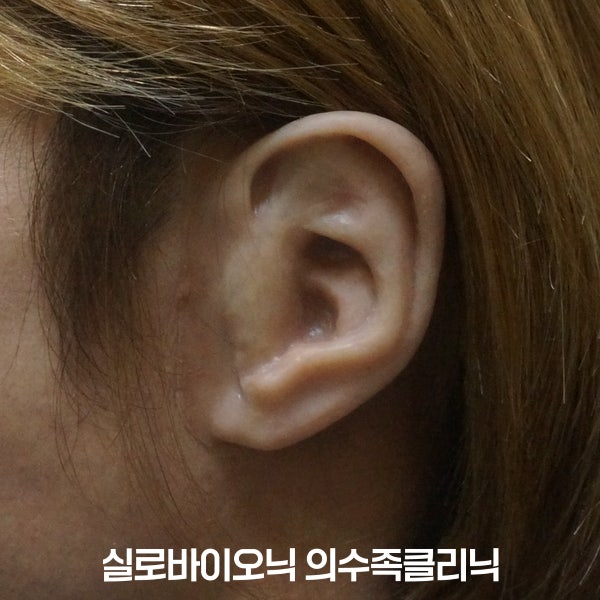
For a baby with microtia (an outer ear that did not fully develop before birth), a custom silicone ear can improve the ear’s appearance while you wait for the right time for reconstructive surgery. A silicone ear only restores appearance — it does not treat hearing or the inner ear — so the first step is always an assessment by an ENT specialist or plastic surgeon.
What is microtia?
Microtia is a condition present from birth in which the outer ear does not fully form, so the ear is small or differently shaped. It is sometimes spotted on a prenatal ultrasound, and sometimes only noticed after the baby is born.
Its appearance varies with how far the outer ear has developed, and it can come with differences in the ear canal or in hearing.
Does an unusual ear shape always mean microtia?
It is hard for parents to tell from a small or less defined ear alone. If you notice a difference in your baby’s ear after birth, please have it assessed by an ENT (ear, nose and throat) specialist or a plastic surgeon first.
Should hearing be checked too?
Yes. Separately from appearance, the ear canal and hearing may need checking. Even if your baby passed the newborn hearing screening, we recommend a detailed examination by an ENT specialist. This is separate from making a silicone ear.
Can a silicone ear be used instead of surgery?
Newborns and very young babies often cannot have surgery on the ear straight away. If you would like to improve the ear’s appearance during this time, a custom silicone ear is an option to consider — either when surgery is not suitable, or while waiting until it is.
| Ear reconstruction surgery | Custom silicone ear | |
|---|---|---|
| Purpose | Builds the ear shape using the child’s own cartilage or an implant | Improves appearance |
| Timing | Decided by the medical team as the child grows | Can be considered from an early age after medical advice |
| Hearing & inner ear | Assessed separately | Does not replace treatment for hearing or inner-ear structures |
| Growth | Planned with the medical team | May need remaking as the ear grows |
How is a silicone ear made and worn?
- Shape — not an off-the-shelf product: we take a mould of the other ear to match its shape and size.
- Skin tone — an E-SKIN scanner (SPECTROMATCH, UK) measures the skin around the ear digitally so the colour blends in.
- Wearing — it is attached with medical adhesive so it joins the contours of the face naturally. We check together during consultation whether it suits your child’s skin.
- Everyday life — face masks and glasses can still be hooked over the ear while it is attached.

How is a child’s growth taken into account?
There is no single right way to address microtia in a baby. We recommend comparing the timing of surgery with non-surgical options, based on your medical team’s diagnosis, before choosing what suits your child. As your child grows, the ear size changes too, so the silicone ear may need to be remade along the way.
Silobionic brings 15+ years of know-how and more than 6,000 prostheses made to every consultation. Send us a photo of your child’s ear and your questions, and we will explain what is possible.
Frequently asked questions
Can a newborn have a silicone ear?
We do make silicone ears for very young babies with microtia. An ENT or plastic surgery assessment should come first, and we check together during consultation whether it suits your child’s skin.
Will a silicone ear improve hearing?
No. A silicone ear restores appearance only and does not treat hearing or the inner ear. Hearing should be checked separately by an ENT specialist.
What happens as my child grows?
The ear grows with your child, so the silicone ear may need to be remade to keep up.
How is the silicone ear attached?
It is attached with medical adhesive. Face masks and glasses can still be hooked over it while it is worn.
Do we have to choose between surgery and a silicone ear?
Not necessarily. Some families use a silicone ear while waiting for surgery. Please discuss what suits your child with your medical team.