My foot prosthesis has hurt for years — what should be checked? A customer story
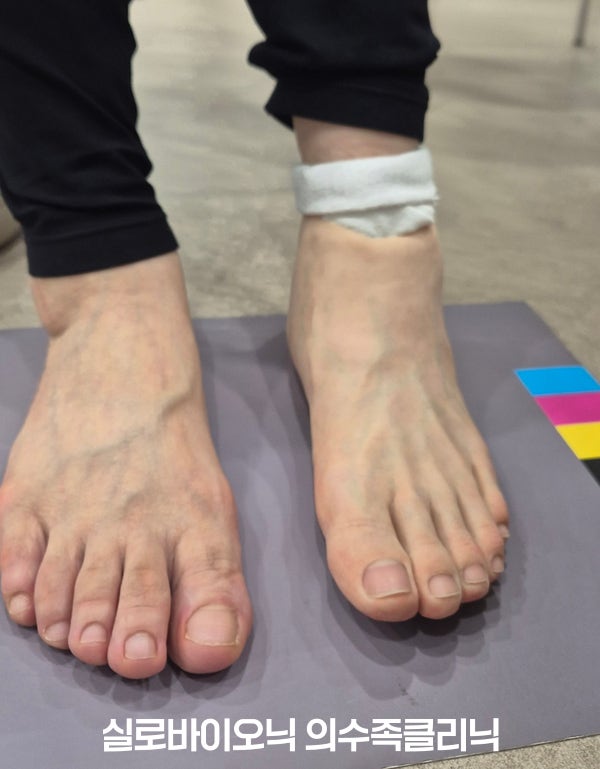
If a prosthesis you have worn for years still hurts, it is worth looking at fit and gait before appearance. This customer had lived with recurring swelling and pain for decades, and the previous prosthesis was so oversized that shoes were hard to put on. We assessed gait and body alignment, tested a check socket (a temporary trial socket) in daily life, and then made a silicone foot prosthesis with different firmness in different areas.
What brought our customer to us?
Our customer lost one foot in an accident as a young adult and had worn a series of prostheses over several decades. To others the walk looked natural, but swelling and pain kept returning, and our customer had come to accept that a prosthesis is simply something you put up with.
The previous silicone prosthesis looked like a foot, but it did not sit closely against the affected area and was too large, so shoes were hard to put on. Walking rubbed the skin painfully, to the point where going out at all felt like a burden.
What did we check?
When pain keeps coming back, how the prosthesis fits and how you walk on it matter more than how it looks. In the consultation we looked at the following together.
| What we checked | Why |
|---|---|
| Walking pattern | To see where, and at which moment, force was concentrated |
| Leg-length difference and pelvic tilt | To set the height and alignment of the prosthesis |
| The most painful areas | To design the prosthesis so those areas are pressed less |
| Daily routine and shoes | To suit the shoes worn most and the day’s activities |
We then took casts of the affected foot and the other foot. The shape is based on the other foot so the pair looks right side by side.

A check socket, tested in daily life
Rather than moving straight to the final prosthesis, we made a clear check socket (a temporary trial socket). Our customer wore it for a while in everyday life, checking whether it sat closely against the affected area, filled the missing volume properly and reduced pain when walking. Uncomfortable spots were marked on the socket, and that feedback went into the final design.

Different firmness in different areas
Silobionic foot prostheses are made from silicone, not filled with other materials inside. Instead, the firmness (hardness) of the silicone varies within the one piece.
- Inner surface against the affected area — soft, so it sits evenly against the skin.
- Sole — firm, to support body weight with each step.
- Outer surface — toe lines, nails and skin tone matched to the other foot.
How did it feel once finished?
On the day the finished prosthesis was fitted, our customer spent a long time looking at it from the toes up. Seeing the toes, nails and skin tone flow together felt, in our customer’s words, like meeting a long-lost foot again — and everything raised in the consultation had been reflected.
With the height and width of the foot now close to the other side, wide shoes are no longer needed to hide it. The way our customer walks and stands, and even the time spent choosing shoes, has been changing little by little. Comfort and results do vary from person to person, depending on the affected area.
Signs worth checking if your prosthesis hurts
- Shoes are hard to put on, or one sole wears down much faster
- The same spot turns red or swells after walking
- Your pelvis or lower back feels tilted to one side when standing
- Putting up with pain has come to feel normal
If any of these sound familiar, rather than accepting them because you have worn a prosthesis for years, have the fit and alignment checked again. If swelling or wounds persist, please see your doctor as well.
Frequently asked questions
Is pain from a long-worn prosthesis just something to live with?
Not necessarily. Rechecking the fit, alignment and walking pattern can show whether something can be improved. Results vary from person to person.
Why is a check socket needed?
It lets you wear a temporary version before the final prosthesis is made, so fit and painful spots can be checked and your feedback built into the final design.
Is a silicone foot prosthesis hard or soft?
It depends on the area. The side against the affected area is soft, and the sole that carries your weight is firm.
Can I wear ordinary shoes with a foot prosthesis?
Because the height and width are matched to your other foot, this customer no longer needed wide shoes. It depends on the affected area, so we check this with you in the consultation.