What can a silicone foot prosthesis do for a congenital foot with only a heel?
For a congenital foot where only the heel formed — no toes and no arch — a custom silicone foot prosthesis moulded from the other foot can restore its appearance and support standing balance. In this case we made the sole firm where it carries weight and soft where it touches the skin. Comfort and changes in walking vary from person to person, so we start by looking at the affected area and how you walk.
Why did our customer come to us?
Our customer was born with one foot that had no toes and no arch — only the heel had formed. An earlier leather prosthesis had felt heavy and dull to wear, and it absorbed sweat and deteriorated quickly, so it was never used for long.
Over time there were more and more moments of taking shoes off or going out with friends, and a bare foot on show became harder to face. A family member noticed this before it was said out loud and suggested a consultation, and they visited together. Seeing similar cases we had made helped with the decision.
Why is filling in the shape not enough when there is no arch?
The arch — the curve in the middle of the sole — helps spread body weight when you stand and keep your balance when you walk. Without it, the sole cannot meet the ground evenly, and posture and walking habits can be affected.
So a foot prosthesis has to be designed around where it carries weight and how it meets the skin, not just how it looks. In the consultation we looked at the shape of the affected area, standing posture, walking pattern and everyday shoes before deciding on a design. For any medical questions about your body, please speak with your doctor.
How was it made?
| Step | What we did |
|---|---|
| Casting | A mould of the other foot set the shape of the toes and nails; a mould of the affected area shaped the inside. |
| Skin tone | An E-SKIN scanner (SPECTROMATCH, UK) measured the skin tone digitally, and custom pigments were mixed from that reading. |
| Firmness | Medical-grade solid silicone, made firmer on the weight-bearing sole and softer where it touches the affected area. |
| Check socket | A temporary trial prosthesis (check socket) confirmed comfort, length and balance when standing and walking before the final piece was made. |
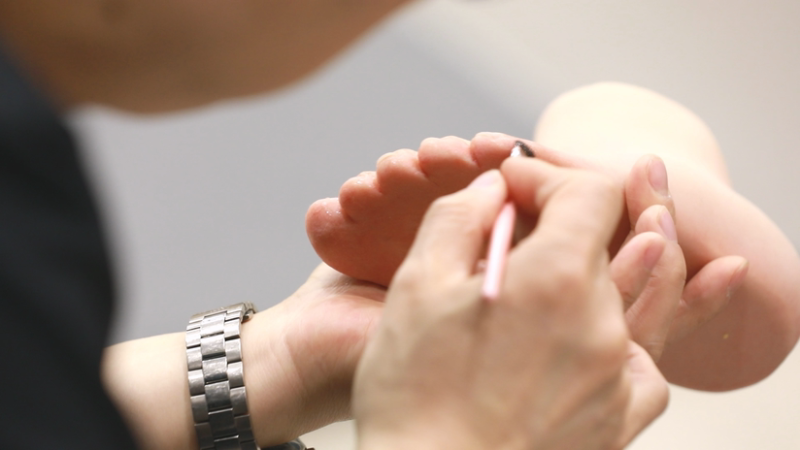
| Finishing | Areas the eye notices first, such as the nail edges and skin texture, were coloured by hand. |

What changed once it was finished?
Our customer had said little during the consultations. At the final fitting, after standing on both feet and trying on a pair of slippers, came the words that walking like any of their friends now felt possible. Our customer loves dress shoes but had never been able to wear them — and the family member who came along said they now wanted to go shoe shopping together, and to the swimming pool.
The aim of this prosthesis was a foot that looks close to the other one, and standing and walking that feel a little steadier. Comfort and changes in walking differ from person to person. If anything becomes uncomfortable with use, we adjust it through after-sales support, and if a repair is not possible we will guide you through a remake.
Have a similar concern? Where to start
Send us photos of your affected area and tell us what feels difficult when you walk, and which shoes you would like to wear. Silobionic works in three standard visits; from consultation to delivery takes about 4–6 weeks, or 1–2 weeks with express production. We confirm your schedule once we have seen your affected area.
Frequently asked questions
Can you make a silicone prosthesis for a congenital foot without toes?
Yes. We make prostheses for congenital feet where part of the foot did not form, including cases where only the heel is present. The outside is moulded from your other foot and the inside is designed around your affected area.
Will a silicone foot prosthesis change how I walk?
By making the sole firm and the inner surface soft, the aim is to support standing and walking. How much it helps varies from person to person, and medical questions about your body are best discussed with your doctor.
How is it different from a leather prosthesis?
Our customer found the earlier leather prosthesis dull to wear and quick to deteriorate with sweat. A silicone prosthesis is matched to your other foot down to skin tone and nails, and its firmness can be set differently in each area.
How long does it take?
We work in three standard visits. From consultation to delivery takes about 4–6 weeks, or 1–2 weeks with express production, depending on your affected area and the product.